

9 Gentle Ways to Clean Vintage Wood Furniture Safely
Last Updated: October 30, 2026
Quick Summary
The safest way to clean vintage wood furniture is to start with dry dusting, then use a mild, diluted soap solution only on finished wood after a patch test. Dry the surface immediately and avoid soaking, abrasives and harsh chemicals.
- Remove loose dust first with a dry microfiber cloth, working with the grain.
- Test any cleaner on a hidden spot and wait a few minutes before proceeding.
- Use a few drops of gentle dish soap in a cup of water with a wrung-out cloth.
- Never wet-clean unfinished wood, because water can raise the grain and stain it.
- Dry the surface immediately, since leftover moisture is a common cause of damage.
Table of Contents
- How to Clean Vintage Wood Furniture Naturally, Step by Step
- Choosing the Best Cleaner for Wood Furniture
- How to Remove Grime From Old Wood Furniture
- Frequently Asked Questions
Vintage wood furniture can look dull, dusty, or sticky after years of use, but clean vintage wood furniture rarely needs harsh chemicals. Start with dust, move to gentle cleaning, and use liquids only when truly needed.
Most vintage pieces have a finish, and that finish decides what is safe. Test any cleaner on a hidden spot, wait a few minutes, and check for color lift, cloudiness, or softening.
Never wet-clean unfinished wood, because water can raise the grain and stain the surface.
How to Clean Vintage Wood Furniture Naturally, Step by Step
Remove loose dust with a dry microfiber cloth, working with the grain, so grit doesn't scratch the finish once moisture is added. Focus on joints, carved details, and the space under drawers.
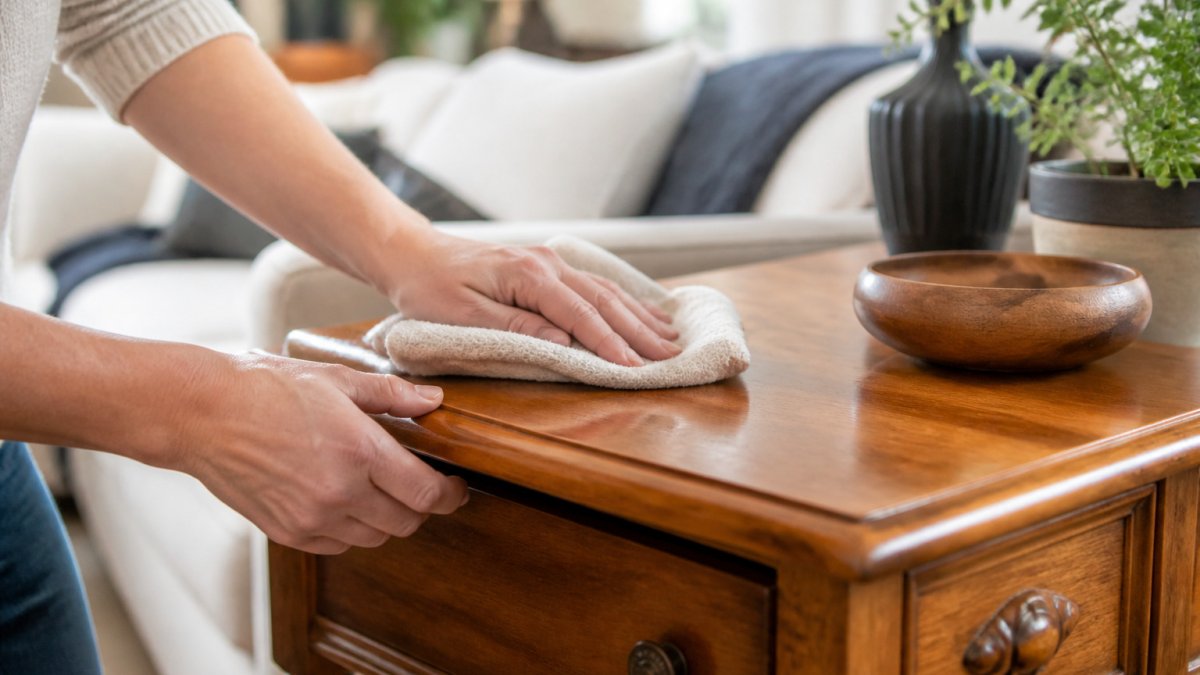
Your vintage furniture should feel dry to the touch when you finish; leftover moisture is a common cause of damage.
The cleaning process works best when each step is kept gentle and the wood is dried promptly.
| Step | What to do | Note |
|---|---|---|
| Remove loose dust | Use a dry microfiber cloth | Work with the grain |
| Focus on tricky spots | Joints, carved details, under drawers | Dust collects here |
| Test the cleaner | Try a hidden spot and wait a few minutes | Check for color lift or cloudiness |
| Dry the surface | Dry immediately after cleaning | Leftover moisture causes damage |
Choosing the Best Cleaner for Wood Furniture
For most vintage pieces, a mild, diluted soap solution is a gentle option for stubborn grime: a few drops of gentle dish soap in a cup of water, applied with a wrung-out cloth. White vinegar and baking soda can be too harsh for delicate finishes, so use them only after a patch test.
Before buying a commercial polish, check the label for oils such as mineral oil or hemp oil. Avoid heavy silicone products, which build up and attract dust.
If you're unsure whether a piece is authentic before cleaning, our guide on how to verify authentic vintage furniture before you buy can help you understand the material.
How to Remove Grime From Old Wood Furniture
Sticky residue and heavy grime need patience, not force. Use the same gentle soap solution in small areas so the wood never sits wet for long, rub lightly, then dry immediately.
Never soak the wood or use steel wool, avoid abrasives on carved or painted details, and call a furniture conservator for valuable or fragile pieces.
Once clean, a light coat of mineral oil restores moisture: apply a small amount with a clean cloth, let it soak in a few minutes, then wipe away any excess.
Vintage pieces like our Vintage Solid Pine Waterfall Side Table ($420.00 CAD) and Vintage Oak Heart Wall Shelf ($128.00 CAD) show beautiful patina when cared for gently. For ideas on displaying a restored piece, see how to style vintage furniture in modern homes.
Frequently Asked Questions
How do you clean antique wood furniture naturally?
Start with a dry, soft cloth to lift dust, then use a barely damp cloth with a drop of mild soap diluted in water for grime. Wipe in the direction of the grain, then dry the surface immediately with a clean towel. Avoid soaking the wood. Test the method on a hidden area first, such as the underside of a shelf, and check the result after a day before cleaning the visible surfaces.
Does Murphy's oil soap clean wood furniture?
Some people use Murphy's Oil Soap on sealed wood, but it is not automatically safe for every vintage finish. Oil-based soaps can leave residue that attracts dust and can dull old shellac or lacquer over time. Dilute any cleaner heavily, test it in an inconspicuous spot first, and avoid using it on unfinished or delicate pieces. When in doubt, use plain mild soap and water instead.
What not to do to antique furniture when cleaning?
Do not soak the wood, use abrasive scrubbers, or apply strong vinegar or baking soda mixtures to finished surfaces without testing first. Avoid wet-cleaning unfinished wood, since moisture can raise the grain and stain the surface. Do not use silicone sprays or heavy polishes that build up waxy film. If the finish is cracked, flaking, or sticky, stop and consult a furniture conservator before going further.
