

Identifying Authentic Vintage vs Reproduction Furniture
Table of Contents
- How to Tell Vintage From Reproduction: Start With Construction
- How to Date Vintage Furniture Using Maker's Marks and Labels
- Your Vintage Furniture Buying Checklist Before You Commit
- Where We Stand
- Frequently Asked Questions
Last Updated: October 21, 2026
How to Tell Vintage From Reproduction: Start With Construction
Identifying vintage versus reproduction furniture starts with the underside, not the showroom finish. Reproduction furniture is new, built to imitate an older style, while a genuine period piece carries construction evidence from its own era.
Flip the table and open the drawer: old drawers were dovetailed by hand with uneven spacing, while modern copies use uniform machine-cut pins. Slot-head screws and cut nails point to an earlier build; Phillips screws and staples signal a later one.
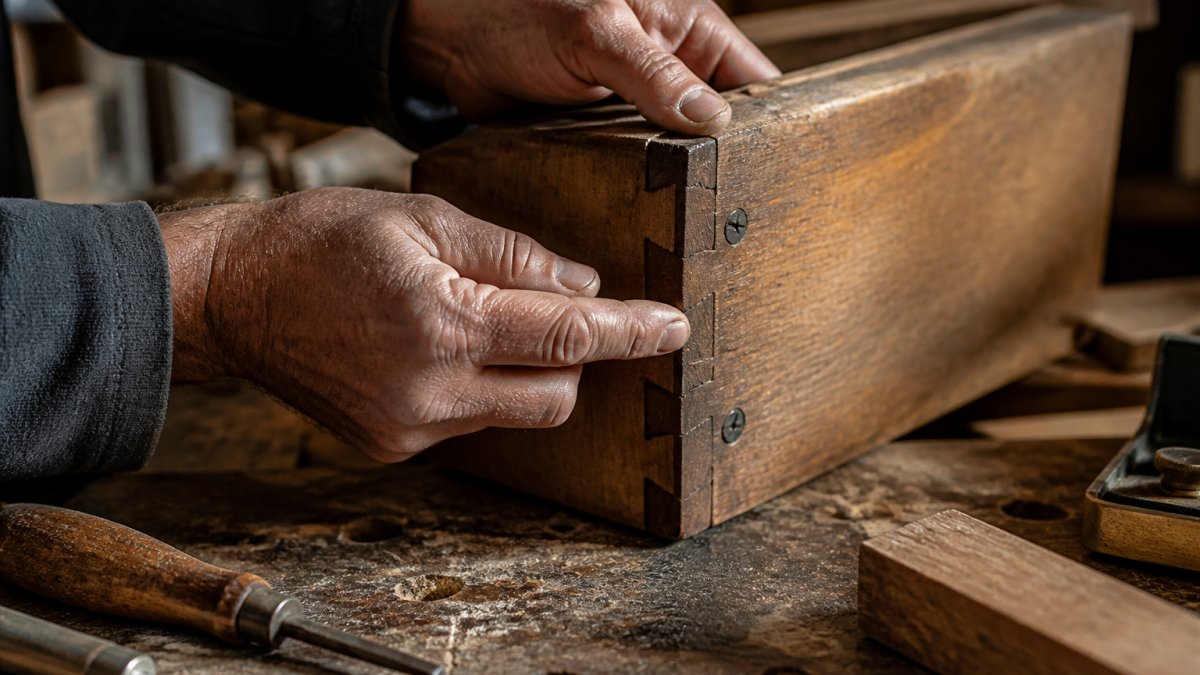
How to Date Vintage Furniture Using Maker's Marks and Labels
A maker's mark is the fastest route to a date, but its absence proves nothing. Look for a stamped name, paper label, stencil, or metal tag on the drawer side, back rail, or seat underside, then photograph it for appraisals or insurance.
Provenance does more work than any single stamp. Ask for ownership history, receipts, or auction paperwork, and treat a confident story without documents as a story. Many pieces were never marked, so construction and materials still decide.
| Mark Type | What It Looks Like | What It Tells You |
|---|---|---|
| Branded stamp | Burned-in name, often faint | Maker and rough production era |
| Paper label | Aged, torn, glued to drawer side | Retailer or manufacturer, useful for dating |
| Stencil | Painted lettering on back rail | Production batch or factory code |
| Metal tag | Screwed-on plate, often brass | Later manufacturer, sometimes a restorer |
| No mark | Nothing at all | Unmarked piece, judge by construction |
Your Vintage Furniture Buying Checklist Before You Commit
Run every candidate piece through this ten-minute inspection sequence before money changes hands.
Vintage Solid Pine Waterfall Side Table →
- Turn the piece over and photograph the joints, fasteners, and back panel.
- Open every drawer and check the slides, stops, and interior finish.
- Feel for patina that sits in the grain rather than sprayed on top.
- Check wear points: arm edges, drawer pulls, and feet should show honest use.
- Record any maker's mark, label, or stencil and exactly where it sits.
- Ask for ownership history and restoration records.
- Compare against reference photos of the style it claims to be.
- Confirm dimensions against your space.
Where We Stand
We would rather sell a piece with honest age-appropriate wear than a flawless copy. Our Vintage Solid Pine Waterfall Side Table shows exactly that character, and the Vintage Three-Tier Marble & Metal Stand is priced with its age in mind. Browse our latest arrivals and look closely.


Frequently Asked Questions
How can you tell if vintage furniture is authentic?
Check construction before cosmetics. Hand-cut dovetails, irregular saw marks, and slot-head screws point to older production, while uniform machine joints and Phillips screws suggest later manufacture. Look underneath and inside drawers where finishes and wear are hardest to fake. Patina should follow where hands and light actually reach, not sit evenly across every surface. A maker's mark helps, but it proves a workshop, not a whole piece, so match it against the construction you can see. When two or three clues agree, confidence rises.
What are the signs that furniture is a reproduction?
Reproductions often show perfectly even distressing, with dents in places nothing would strike. Fresh sawdust in joints, uniform color under the top, and modern fasteners like Phillips or Torx screws are common tells. Staples and plywood edges in a piece claimed to be nineteenth century are another. Reproduction furniture can still be well made, so treat these as questions to ask rather than automatic rejections. Ask the seller about ownership history and whether the finish has been renewed, then compare the answers with what you see.
Does a maker's mark prove that furniture is authentic?
No. A stamp, label, or brand proves a workshop existed, not that the whole piece came from it. Labels can be transferred, and reproductions sometimes copy marks. Verify by checking that the mark's era matches the construction methods, hardware, and wood type you observe. Research the maker's active years and typical joinery, then look for consistency. Provenance documents, original receipts, or family history strengthen a claim, but visual identification alone has limits. Treat any single clue as one part of the picture.
The hardest part of buying vintage is trusting what you cannot see in a photo. Somerset General takes that risk off your hands by inspecting construction, marks, and condition before anything is listed, and by describing wear honestly rather than hiding it. Browse our one-of-a-kind finds, from furniture to accessories, and start with a piece you will want to pass along.