

Best Ways to Clean Vintage Home Accessories Safely
Last Updated: November 1, 2026
Quick Summary
To clean vintage home accessories safely, first identify each material and test any cleaner on a hidden spot before you begin. Dust wood often, wipe it with a barely damp cloth and dry right away, and never machine wash antique textiles. For badly damaged or valuable pieces, consider consulting a professional conservator.
- Ask what an item is made of, whether it is solid or veneered, and whether wear adds value.
- Never pour water directly on wood, since damage shows up as white rings and raised grain.
- Vacuum vintage textiles gently on low suction through a cloth and air dry them flat.
- Wipe cast iron décor with a damp cloth, dry fully, then rub in a thin coat of oil.
- Never mix bleach with other cleaners, and keep strong products away from gilded surfaces.
Table of Contents
- Assess Before You Clean: The Step Most People Skip
- How to Clean Antique Wood Furniture Without Stripping the Finish
- How to Clean Vintage Textiles, Cast Iron Décor and Delicate Surfaces
- Frequently Asked Questions
Assess Before You Clean: The Step Most People Skip
Before you clean anything in a clean vintage home, stop and look closely. The best ways to clean vintage home accessories start with knowing what you're holding.
Ask three questions first:
- What is it made of? Wood, porcelain, cast iron, glass and textiles each need different care.
- Is it solid or veneered? Thin veneer can lift if it gets too wet.
- Is the wear part of its charm? Patina and light gilding wear often add value.
Authenticity matters too: a reproduction may take a harsher clean than a true antique. Learn more in Identifying Authentic Vintage vs Reproduction Furniture.
Watch out: cleaning before you know the material is the fastest way to strip a finish or lift gilding. Test first.
How to Clean Antique Wood Furniture Without Stripping the Finish
The safest way to clean antique wood furniture is a light touch: dust often, wipe with a barely damp cloth, and dry right away.
Follow these steps:
- Dust with a soft cloth or brush on carved corners and drawers.
- Mix mild soap in warm water, then wring the cloth nearly dry.
- Wipe gently with the grain, dry thoroughly, then buff to a soft shine.
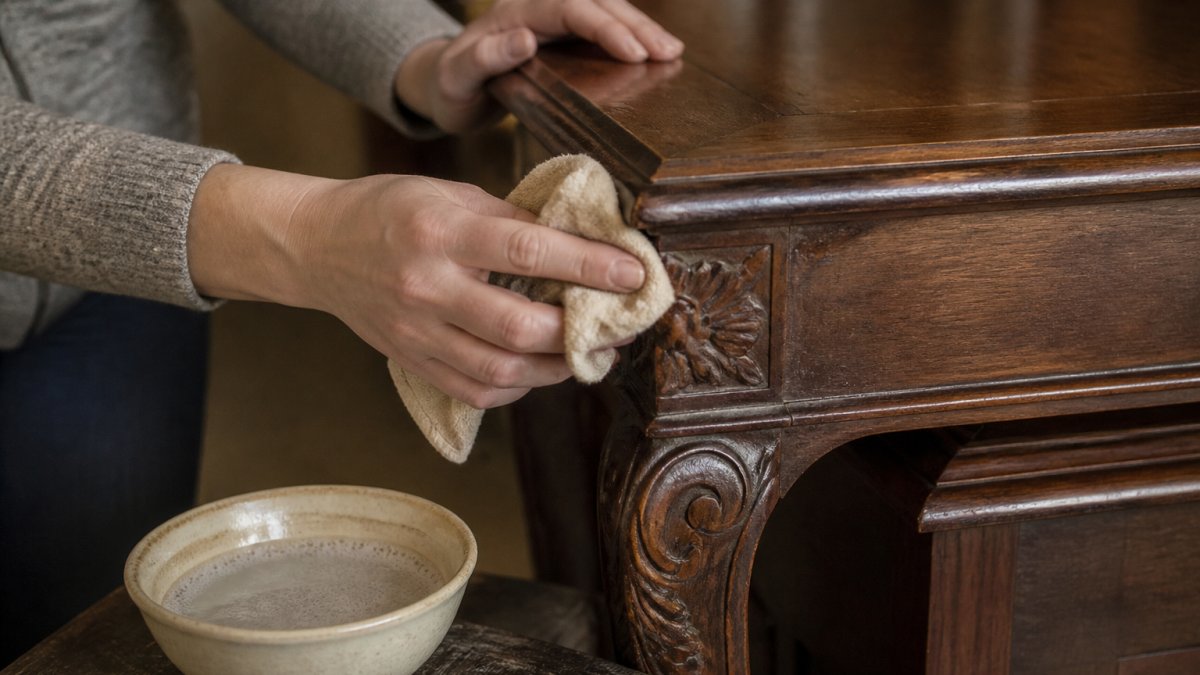
Never pour water directly on wood; damage shows up fast as white rings and raised grain.
How to Clean Vintage Textiles, Cast Iron Décor and Delicate Surfaces
How to clean vintage textiles: vacuum gently on low suction through a cloth, spot clean with diluted soap, and air dry flat. Never machine wash an antique textile.
How to clean cast iron décor: wipe with a damp cloth, dry fully, then rub a thin coat of oil to keep rust away. Skip soapy soaking.
How to clean delicate porcelain and glass: use a soft cloth, mild soapy water, and gentle circles. Test any cleaner on a hidden spot first.
For fragile hand-painted porcelain, handle with care. Browse a similar piece in our Antique Limoges Elite Works Floral Porcelain Serving Platter. See a real example in our Vintage Birks hand-painted French porcelain gold floral bowl. Pieces like our Vintage Birks hand-painted French porcelain gold floral bowl or an antique Limoges Elite Works floral porcelain serving platter reward a light touch.


A quick decision guide:
| Material | Best Method | Avoid |
|---|---|---|
| Wood | Damp cloth, dry, buff | Soaking, harsh sprays |
| Textiles | Low vacuum, spot clean | Machine washing |
| Cast iron | Damp wipe, oil coat | Soapy soaks |
| Porcelain, glass | Mild soap, soft cloth | Abrasives, hot water |
Watch out: never mix bleach with other cleaners, and keep strong products away from gilded or painted surfaces. For badly damaged or valuable pieces, consider consulting a professional conservator (Basic Care of Books - Canadian Conservation Institute (CCI) Notes 11/7).
Frequently Asked Questions
How can you tell whether a vintage accessory needs professional cleaning?
Look for loose veneer, lifting gilt, active mold, or a musty odor that returns after airing. If the surface feels tacky, flakes when touched, or the piece has water damage, stop and consult a conservator. Delicate textiles with fragile fibers and anything with hand-painted decoration also warrant professional assessment. A conservator can stabilize a piece before cleaning, which protects both its finish and its value.
What should you avoid when cleaning antique or vintage items?
Skip abrasive pads, undiluted bleach, and hot water on gilded or hand-painted surfaces. Never submerge wood, and avoid ammonia on gilt porcelain because it can dull gold decoration. Test any cleaning solution on an inconspicuous area first, and use a soft brush rather than scrubbing. Rinse sparingly and dry thoroughly, since trapped moisture causes mold, mildew, and water damage.
How do you remove odors from vintage home accessories?
Start with fresh air and sunlight for a few hours, then place a small dish of baking soda nearby for textiles and drawers. For musty wood, wipe with a barely damp cloth and dry thoroughly before storing. Avoid masking odors with polish, which can trap moisture. If a musty odor persists after two weeks of airing, the piece may have mildew and needs professional attention.
Cleaning vintage pieces takes patience, but the payoff is a home full of character that lasts. Somerset General curates one-of-a-kind vintage décor chosen to be cherished and passed along, with new finds added daily. Get started with Somerset General and bring lasting charm into your space.
