

How to Assess Vintage Furniture Condition
Last Updated: November 14, 2026
Quick Summary
Assess vintage furniture condition by inspecting every piece in daylight, outside in, then underneath: silhouette, wood type, joints, and drawer guides. Good condition means stable, not flawless, so wear is normal but a wobble, fresh crack, or strong paint smell is not. Photograph every flaw before paying.
- Check stability, test every drawer and door, inspect joints for gaps or fresh glue, and look for cracks and lifting veneer.
- A frame that twists under light pressure means you should walk away.
- Fresh glue squeeze-out, mismatched screws, and sanded corners all point to restoration work.
- A drawer pull with newer holes beside it means the piece was altered.
- Compare wear on the wood with wear on the metal to spot replaced hardware.
Table of Contents
- How to Inspect Vintage Furniture Before Buying
- Your Vintage Furniture Condition Checklist
- Signs of Furniture Repair and Restoration
- Frequently Asked Questions
How to Inspect Vintage Furniture Before Buying
Assessing vintage furniture condition starts with your eyes and hands. Inspect every piece in daylight, outside in, then underneath: silhouette, wood type, joints, and drawer guides. A condition record of photos and notes protects you in any negotiation.
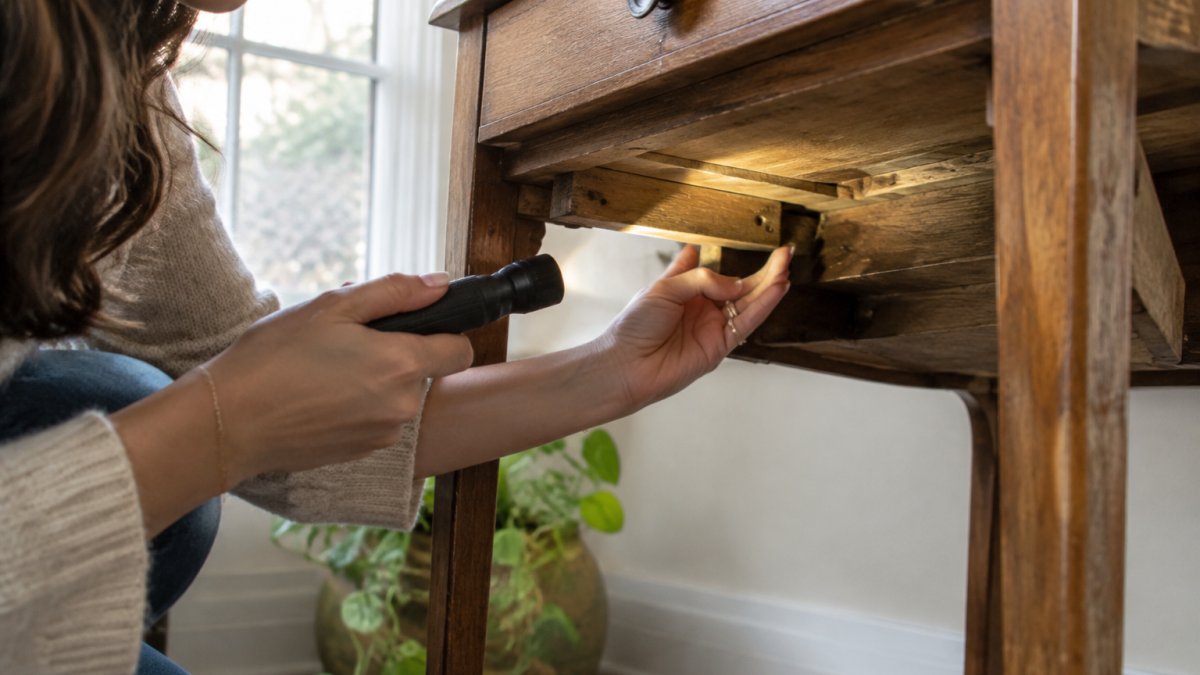
Good condition means stable, not flawless. Wear on a 60-year-old table is normal; a wobble, fresh crack, or strong paint smell is not. Curated pieces cost more because someone already did this inspection, which is why fair prices for curated vintage reflect real work.
Your Vintage Furniture Condition Checklist
A vintage furniture condition checklist keeps you honest: check stability, test every drawer and door, inspect joints for gaps or fresh glue, look for cracks and lifting veneer, smell for mildew or paint, and photograph every flaw before paying.
If the wood needs a clean, use gentle methods only; our guide on safe ways to clean vintage wood covers what to use and avoid. Once you know what to look for, browse standout vintage pieces for sale with a trained eye.
| Check | What Good Looks Like | Walk Away If |
|---|---|---|
| Stability | Sits flat, no rock | Frame twists under light pressure |
| Drawers | Smooth glide, tight joints | Sticks, sags, or rattles |
| Surface | Even patina, tight veneer | Lifting, bubbling, soft spots |
Signs of Furniture Repair and Restoration
Repairs are not automatically bad, but you need to know what you are looking at. Fresh glue squeeze-out, mismatched screws, and sanded corners all point to restoration work; some repairs add strength, others hide damage.
Replaced hardware tells the story: a drawer pull with newer holes beside it means the piece was altered. Compare wear on the wood with wear on the metal, if one is bright and the other worn, they did not start life together. Our guide on spotting authentic vintage vs reproduction walks through the details.
Vintage furniture rewards patience and a sharp eye. The pieces worth keeping are the ones that pass a careful inspection, not the ones that look good in a photo. Somerset General curates every piece with that standard in mind, from one-of-a-kind finds to new inventory added daily, so you can buy with confidence and add real character to your home. Get started with Somerset General and find a piece worth passing along.
Frequently Asked Questions
How can you tell if vintage furniture has been repaired?
Look for mismatched wood grain, fresh glue squeeze-out at joints, newer screws, and finish that stops abruptly at a seam. Repair is not automatically a problem, but it changes what you should pay. Ask the seller what was repaired and when, then judge whether the work was done with materials suited to the piece.
What types of damage should you look for in vintage furniture?
Check for loose joints, wobbling legs, splitting along the grain, water rings, veneer lifting, and drawers that stick or drop. Surface scratches and patina usually reflect age, while fresh cracks, soft or crumbling wood, and movement under light pressure point to active damage that needs fixing before the piece is used.
How do you assess vintage furniture from photos?
Ask for natural-light photos of the top, edges, joints, drawer interiors, and the back or underside. Request close-ups of any wear. Compare the color against a neutral reference before committing.
